Most callers hate IVRs. You've probably experienced it yourself. You call a business, hear a long list of menu options, press the wrong number, wait on hold, get transferred twice, and eventually give up. It's frustrating. Sometimes it's enough to make you call a competitor instead.
For businesses, that's a bigger problem than many realize. Every missed call, abandoned call, or poor phone experience can mean a lost customer, a missed appointment, or a sales opportunity that disappears before a real conversation even starts.
The challenge is that inbound phone calls remain one of the highest-intent customer touchpoints. People usually call when they need help now. They're looking for answers, support, pricing, appointments, or information. Yet many businesses still rely on traditional IVR systems that were designed decades ago.
In 2026, that approach is starting to show its age. Instead of forcing callers through endless menus, companies are increasingly choosing AI voice agents that can understand natural speech, answer instantly, and complete tasks without making customers feel like they're talking to a machine.
The result is a smoother experience for callers and a more efficient way for businesses to automate inbound calls without sacrificing customer satisfaction.
This guide explains how businesses can automate inbound calls using AI voice agents that understand natural conversations, handle requests instantly, route calls intelligently, and improve customer satisfaction. Learn how industries like healthcare, insurance, finance, retail, real estate, and hospitality are replacing outdated IVRs with modern conversational AI IVR solutions in 2026.
The Real Cost of Traditional IVR Systems
Traditional IVR systems were originally designed to reduce call center workload. In theory, they help route callers to the right department. In practice, they often create friction before a real conversation even starts.
Call Abandonment
Every extra step increases the chance that someone hangs up. A prospect calling about a service may decide to contact a competitor instead. An existing customer may postpone their request. Either way, the opportunity is lost.
Long Hold Times
Even after navigating menu options, callers are frequently placed on hold. During peak hours, wait times can stretch from a few minutes to much longer. For customers with urgent questions, that's enough reason to leave.
Wrong Transfers
Many callers aren't sure which menu option applies to their situation. As a result, they get transferred to the wrong department and must repeat their issue multiple times. Nothing annoys customers faster.
Poor Customer Experience
Modern consumers are used to convenience. They can order food, book rides, and manage finances with a few taps on their phones. When they encounter a complicated phone system, it feels outdated.
Missed Opportunities
Perhaps the highest cost is invisible.
Many businesses invest heavily in advertising, media campaigns, and referrals to generate inbound calls. Yet a significant percentage of callers never reach the right person because of hold times, complicated menus, or after-hours limitations.
Those missed conversations often translate directly into missed revenue.
What Does Inbound Call Automation Mean in 2026?
When people hear the phrase inbound call automation, they often imagine traditional phone trees. But automation has changed dramatically.
Old Automation
The traditional model looked something like this:
- Press 1 for sales
- Press 2 for support
- Press 3 for billing
- Press 4 to repeat options
Customers had to adapt to the system.
New Automation
Today's AI-powered systems work differently.
Customers simply speak naturally:
"I'd like to schedule an appointment."
"I need help with my insurance claim."
"Can I check my order status?"
The system understands what the caller wants and takes action immediately.
Natural Conversations
Modern conversational AI for phone calls can interpret requests in everyday language.
Intent Recognition
The system identifies why the customer is calling and determines the next best action.
Task Completion
Instead of simply routing calls, AI can complete many tasks directly.
This is what makes modern inbound call automation fundamentally different from traditional IVR technology.
Why AI Voice Agents Are Replacing Traditional IVR Systems
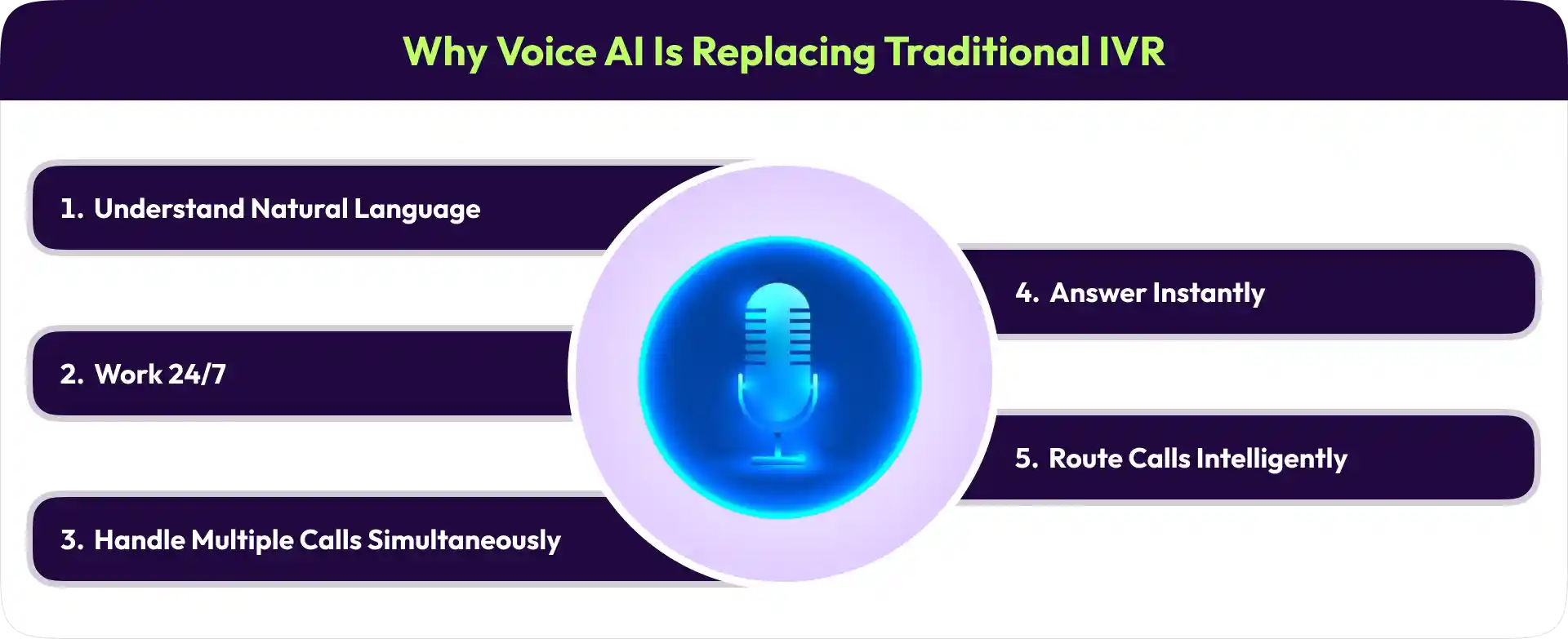
They Understand Natural Language
Customers no longer need to memorize menu options. An AI voice agent can understand requests expressed in different ways. For example:
- "I want to book an appointment."
- "Can I schedule a consultation?"
- "I'd like to meet with someone next week."
All three requests lead to the same outcome.
They Answer Instantly
Nobody likes waiting. AI call answering systems can answer calls immediately, reducing delays and improving customer satisfaction.
They Handle Multiple Calls Simultaneously
Human teams can only manage a limited number of conversations at once. AI voice agents can handle many inbound calls simultaneously without increasing wait times.
They Work 24/7
Customers don't stop calling after business hours. An automated phone answering service can capture leads, answer questions, and schedule appointments around the clock.
They Route Calls Intelligently
When escalation is needed, intelligent call routing ensures the caller reaches the right person quickly. No guessing. No unnecessary transfers.
How AI Voice Agents Handle Inbound Calls Step by Step
Modern AI voice agents follow a structured process while keeping conversations natural.
1. Answer the Call: The system picks up immediately and greets the caller. No waiting. No voicemail. No hold music.
2. Understand Intent: Using conversational AI, it identifies why the person is calling. For example:
- Book an appointment
- Request support
- Ask about pricing
- Check an order status
3. Resolve Common Requests: Many inquiries can be handled instantly, including:
- Appointment scheduling
- Order status requests
- Account questions
- Business information
- Policy inquiries
4. Qualify Leads: For sales-related calls, the AI can gather important details. Questions about budget, timeline, location, or service requirements help identify qualified opportunities before transferring the conversation.
5. Schedule Appointments: The AI can connect with scheduling systems and book appointments directly. Customers receive immediate confirmation without waiting for a callback.
6. Transfer When Needed: If human intervention is required, the call is transferred with context already captured.
7. Log Everything Automatically: Call summaries, customer details, and outcomes are automatically recorded in connected systems.
Industry Examples: How Businesses Are Automating Inbound Calls
1. Healthcare
Healthcare providers receive a high volume of repetitive calls every day. Common use cases include: Appointment scheduling, prescription refill requests, insurance verification, and patient FAQs. An AI voice agent can handle these tasks while allowing staff to focus on patient care.
Potential Result: Reduced front-desk workload and faster patient response times.
2. Insurance
Insurance companies often manage large volumes of customer inquiries. Examples include: claims intake, policy inquiries, renewal reminders, and lead qualification. AI voice agents can collect information before involving an agent.
Potential Result: Faster first response and more qualified opportunities reaching agents.
3. Financial Services
Financial institutions receive inquiries across multiple service areas. Examples include:
- Loan inquiries
- Account support routing
- Appointment scheduling
- Lead capture
Potential Result: Better customer engagement and reduced administrative workload.
4. Retail & E-commerce
Retail businesses frequently manage repetitive support requests. Examples include:
- Order status updates
- Returns processing
- Product inquiries
- Store information
Potential Result: Lower support volume and quicker customer assistance.
5. Real Estate
Speed matters in real estate. The first company to respond often wins the lead. Examples include:
- Property inquiries
- Lead qualification
- Viewing appointments
Potential Result: Faster lead response times and fewer missed opportunities.
6. Travel & Hospitality
Guests expect quick service. Examples include:
- Reservations
- Booking changes
- Guest requests
Potential Result: Improved guest experience and increased operational efficiency.
Key Metrics Businesses Should Track
Many businesses deploy customer service automation but never measure its effectiveness. That is a mistake. The technology matters, but measuring results matters even more. These are the key metrics worth tracking.
Call Abandonment Rate
This measures how many callers hang up before receiving assistance. A high abandonment rate often points to long wait times, poor call handling, or routing issues. When AI voice agents are implemented correctly, businesses often see abandonment rates decrease because callers receive immediate responses.
Average Speed to Answer
This tracks how quickly incoming calls are answered. Customers have become accustomed to instant service. Waiting several minutes for assistance can negatively impact satisfaction and conversion rates.
A conversational AI phone system can dramatically reduce response times
This measures how many customer issues are resolved during the first interaction. The higher this number, the better the experience. If customers repeatedly call back about the same issue, there is usually room for improvement.
Lead Conversion Rate
For sales-driven organizations, this metric is critical. Track how many inbound callers eventually become customers. Many businesses discover that faster response times lead directly to higher conversion rates
After-Hours Capture Rate
A surprising number of opportunities arrive outside standard business hours. Monitoring how many calls are handled successfully after hours can reveal hidden revenue opportunities.
For some businesses, evenings and weekends generate more qualified leads than expected.
Common Mistakes When Automating Inbound Calls
Automating Everything
Not every interaction should be automated. Complex issues still benefit from human expertise.
No Human Escalation Path
Customers need a clear option to reach a person when necessary. Without it, frustration increases quickly.
Ignoring Analytics
Call data provides valuable insights. Businesses that fail to review performance metrics often miss improvement opportunities.
Using Generic Scripts
Conversations should feel relevant and helpful. Overly scripted interactions can feel robotic and reduce engagement.
Not all platforms offer the same capabilities. Use this evaluation checklist when comparing solutions.
Natural Conversations
The system should understand how people actually speak. Customers rarely follow perfect scripts. The platform should recognize different ways of asking the same question and respond naturally
CRM Integration
Customer information should flow automatically into your CRM. This reduces manual work and helps teams maintain accurate records.
Scheduling Integration
If your business relies on appointments, scheduling capabilities are essential. The AI should be able to book, modify, and confirm appointments directly.
Compliance Support
Industries such as healthcare, insurance, and financial services often have regulatory requirements. Ensure the platform supports necessary compliance and security standards.
Reporting
Visibility matters. Look for detailed reporting that shows call volumes, outcomes, customer intent, conversion metrics, and performance trends.
Multi-Language Support
Customer bases are increasingly diverse. The ability to communicate in multiple languages can improve accessibility and customer satisfaction.
Scalability
Your call volume today may look very different six months from now. Choose a platform that can grow with your business without requiring major infrastructure changes.
Conclusion
Traditional IVR systems helped businesses manage calls for years, but customer expectations have evolved. Today, people don't want to navigate complex phone menus or spend time waiting on hold. They want quick answers and a smooth experience.
Businesses that automate inbound calls with voice AI solutions can respond faster, reduce repetitive workload, capture more opportunities, and improve customer satisfaction. The goal isn't to replace human teams, it's to help them focus on conversations that matter most.
As customer expectations continue to rise, conversational AI is becoming the preferred IVR alternative. For businesses considering inbound call automation, the real question isn't whether to automate calls; it's whether your current phone experience is helping customers or creating unnecessary friction.
Frequently Asked Questions (FAQs)
1. What is inbound call automation?
Inbound call automation uses AI to answer, manage, and route incoming calls, helping businesses respond faster while reducing manual workload.
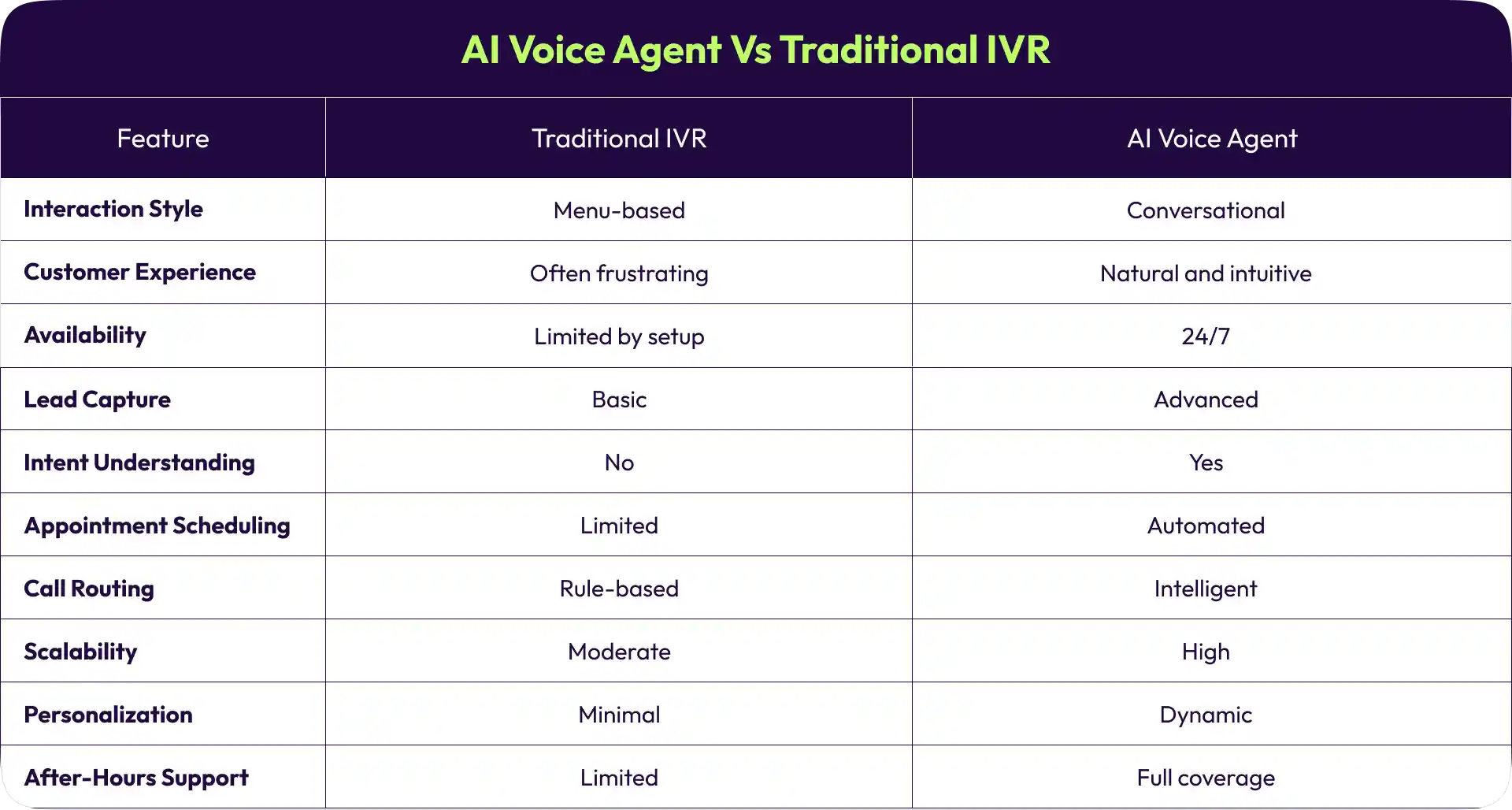
2. How is an AI voice agent different from a traditional IVR?
Unlike traditional IVRs that rely on menu options, AI voice agents understand natural speech and help callers through conversation.
3. Can AI voice agents handle customer calls without human intervention?
Yes. AI voice agents can manage routine requests such as appointment booking, FAQs, lead qualification, and call routing. Complex issues can be transferred to a human agent.
4. What are the benefits of automating inbound calls?
Businesses can reduce wait times, improve customer experience, capture more leads, provide 24/7 support, and increase operational efficiency.
Look for features such as natural language understanding, CRM and scheduling integrations, analytics, compliance support, and scalability.