Appointment scheduling is one of the first interactions customers have with a business. But many organizations still rely on manual processes, limited office hours, and overloaded staff to manage bookings.
The result? Missed calls, delayed responses, scheduling errors, and lost opportunities.
As customer expectations continue to rise, businesses across healthcare, professional services, hospitality and travel, real estate, and home services are looking for faster and more efficient ways to manage appointments.
This is where AI appointment scheduling comes in. Powered by Voice AI, businesses can automatically answer calls, book appointments, handle rescheduling requests, and send confirmations around the clock.
In this guide, we'll explore how Voice AI is changing appointment scheduling, why traditional booking systems are falling behind, and how businesses are using AI to create a better scheduling experience for both customers and staff.
What Is AI Appointment Scheduling?
AI appointment scheduling uses artificial intelligence to automate the process of booking, managing, and organizing appointments.
Instead of requiring a staff member to answer every call or manually coordinate schedules, AI can handle many of those tasks automatically. A typical AI scheduling system can:
- Check availability
- Book appointments
- Send confirmations
- Issue reminders
- Handle cancellations
- Manage rescheduling requests
The goal isn't simply to automate tasks. It's to reduce delays and make scheduling easier for both businesses and customers.
For example, if a patient calls a clinic at 9 PM, AI can still answer the call, verify available slots, and schedule an appointment without requiring anyone from the front desk to be present.
That's a small change on the surface, but it can have a significant impact on customer experience and operational efficiency.
Why Traditional Appointment Booking Systems Are Falling Behind
Long Hold Times Frustrate Customers
Nobody enjoys waiting on hold. Yet many organizations still depend on staff members to answer every scheduling call manually. During busy periods, phones pile up faster than employees can respond.
Customers often wait several minutes before reaching someone. Some simply hang up, and once a caller hangs up, there is no guarantee they'll try again. Many will contact a competitor instead.
Missed Calls Mean Lost Revenue Opportunities
A missed call is often more than just a missed conversation. It can mean:
- A lost patient appointment
- A missed property viewing
- A consultation that never happens
- A service request that goes elsewhere
Many businesses underestimate how much revenue disappears because nobody answers the phone. What's interesting is that demand often isn't the problem. Availability is.
Potential customers are already trying to book. The business simply isn't available at that exact moment.
Limited Business Hours Restrict Booking Availability
Most appointment requests don't happen neatly between 9 AM and 5 PM. People call before work, during lunch breaks, in the evenings, and on weekends.
Traditional scheduling processes create a gap between when customers want to book and when businesses are available to respond. Voice AI helps bridge that gap by remaining available around the clock.
Administrative Workloads Continue to Increase
Front-desk teams handle far more than appointment scheduling. They answer questions, manage paperwork, coordinate internal tasks, and assist customers throughout the day.
Adding hundreds of scheduling calls every week creates additional pressure. Over time, staff burnout becomes a real concern. Many businesses eventually face a difficult choice:
- Hire more staff
- Accept slower response times
Neither option is ideal.
Scheduling Errors and Double Bookings
Manual scheduling always carries some risk. Appointments may be entered incorrectly. Calendar conflicts can occur. Information can be missed during busy periods.
Even small mistakes create headaches for both customers and employees. A scheduling error that takes seconds to make can require multiple calls and emails to fix.
Rising Staffing Costs for Appointment Management
Hiring additional administrative staff is expensive. Beyond salaries, organizations also face costs related to training, management, benefits, and turnover. As appointment volumes grow, relying entirely on people to manage scheduling becomes increasingly difficult to scale. This is one reason businesses are exploring AI-driven alternatives.
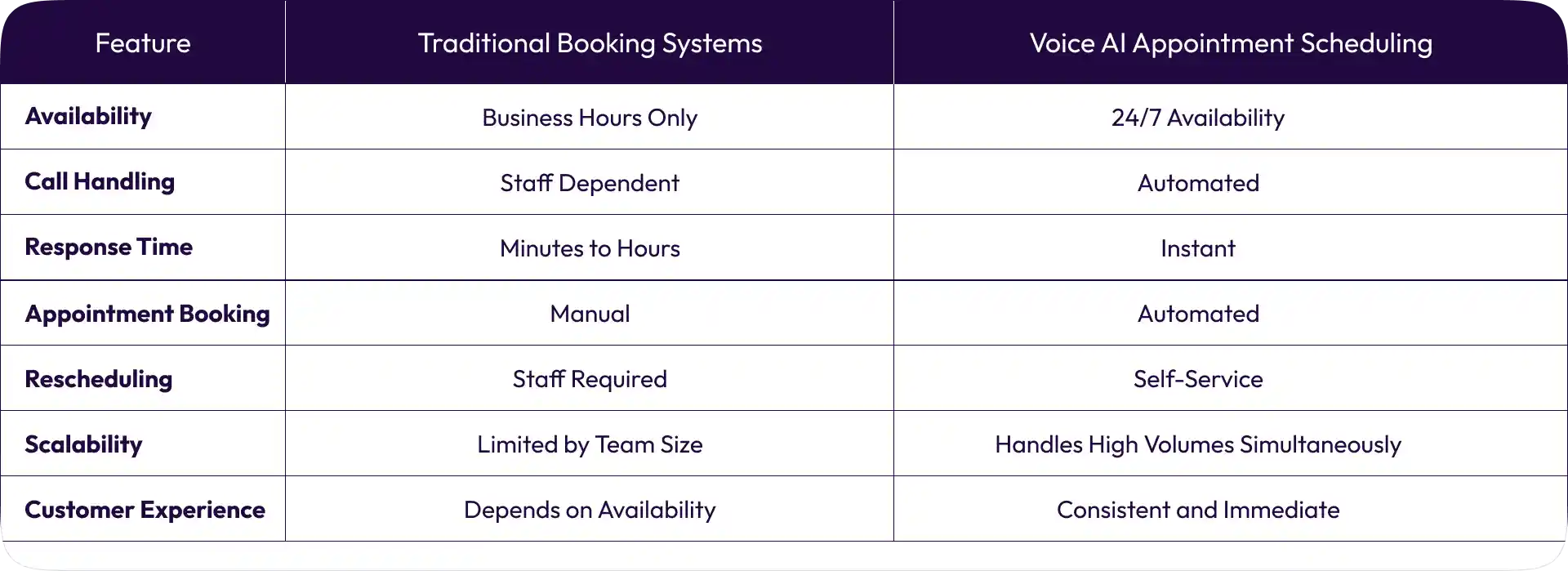
Voice AI vs Traditional Appointment Booking Systems
Why Businesses Are Shifting Toward Voice AI
Traditional booking systems were built for a different time. When appointment volumes were lower and customers were comfortable waiting for callbacks, manual scheduling worked reasonably well. Today, expectations are different.
Customers want answers immediately. If they call a clinic, a hotel, or a service provider, they expect someone or something to respond right away. AI voice agent helps businesses meet those expectations without expanding administrative teams.
What's interesting is that Voice AI doesn't necessarily replace existing scheduling software. In most cases, it works alongside calendars, CRMs, booking tools, and customer management systems already in place.
The scheduling infrastructure remains the same. The customer experience becomes faster and more accessible.
Key Benefits of AI Appointment Scheduling
24/7 Appointment Booking Availability
Business doesn't stop when the office closes. Many appointment requests happen after working hours, especially from people who are busy throughout the day.
With Voice AI, customers can book appointments whenever it's convenient for them. That availability can make a noticeable difference, particularly in industries where speed matters.
Faster Response Times and Reduced Wait Times
Waiting on hold is frustrating. Voice AI answers immediately, reducing delays and helping customers get what they need without unnecessary back-and-forth. Even a few minutes saved during scheduling can improve the overall experience.
Reduced Administrative Workload
Administrative teams spend a surprising amount of time handling routine scheduling tasks. These include:
- Booking appointments
- Confirming appointments
- Changing schedules
- Managing cancellations
Voice AI can take over many of these repetitive interactions, allowing staff to focus on higher-value work.
Lower Operational Costs
Hiring additional receptionists or coordinators isn't always practical. As appointment volumes increase, labor costs often increase alongside them.
AI scheduling helps businesses handle more bookings without continuously adding staff. That doesn't mean eliminating people. It means allowing teams to operate more efficiently.
Improved Customer and Client Experience
A smooth scheduling experience leaves a positive first impression. Customers appreciate:
- Quick responses
- Easy booking
- Flexible scheduling
- Immediate confirmations
Small conveniences often have a bigger impact than businesses realize.
Fewer Missed Booking Opportunities
One missed call can represent a missed opportunity. Voice AI ensures incoming appointment requests are handled consistently, even during busy periods.
Businesses can capture more opportunities simply because someone, or rather, something, is always available to answer.
Better Resource Allocation and Team Productivity
When staff spend less time answering routine scheduling calls, they can focus on activities that require human expertise. This often improves productivity across the organization.
Scalability Without Increasing Headcount
A receptionist can only handle one call at a time. Voice AI can manage multiple conversations simultaneously.
As demand grows, businesses can accommodate more appointment requests without dramatically changing their staffing model.
How Different Industries Use AI Appointment Scheduling
1. Healthcare
Common Scheduling Challenges
Healthcare providers deal with constant appointment activity. Patients call to:
- Schedule visits
- Confirm appointments
- Reschedule consultations
- Request follow-ups
Front-desk teams often struggle to keep up, particularly during peak hours. Missed calls can lead to delayed care and lost appointment opportunities.
How Voice AI Helps Healthcare Providers
Voice AI can answer patient calls immediately, schedule appointments, collect basic information, and send reminders automatically.
It can also help reduce no-shows by providing timely confirmations and follow-up notifications. For clinics already dealing with staffing shortages, that's a meaningful advantage.
2. Professional Services
Common Scheduling Challenges
Consultants, financial advisors, accountants, and legal professionals spend significant time coordinating meetings. Scheduling often involves:
- Consultation requests
- Follow-up appointments
- Calendar coordination
- Client reminders
Manual scheduling can quickly become time-consuming.
How Voice AI Helps Consultants, Financial Advisors, and Legal Firms
Voice AI can qualify inquiries, schedule consultations, and coordinate appointments without requiring constant staff involvement. Clients receive immediate responses, while professionals spend less time managing calendars.
3. Hospitality & Travel
Common Scheduling Challenges
Hotels, hospitality, and travel agencies receive booking requests throughout the day and night. Common requests include:
- Reservations
- Booking confirmations
- Travel consultations
- Guest inquiries
Meeting customer expectations around the clock can be difficult.
How Voice AI Helps Hotels, Resorts, and Travel Businesses
Voice AI can handle reservation requests, confirm bookings, answer common questions, and assist guests even when staff are unavailable. This helps create a more responsive guest experience.
4. Real Estate
Common Scheduling Challenges
Real estate professionals coordinate a wide range of appointments, including:
- Property viewings
- Buyer consultations
- Seller meetings
- Follow-up discussions
Timing often plays a major role in closing deals.
How Voice AI Helps Real Estate Agencies
Voice AI can schedule showings, confirm appointments, and coordinate availability between agents and prospects. Potential buyers receive faster responses, reducing the risk of losing interest or moving on to another property.
5. Home Services
Common Scheduling Challenges
Home service businesses frequently receive appointment requests for:
- Plumbing
- HVAC services
- Electrical work
- Cleaning services
- Emergency repairs
Calls often arrive when technicians are already on-site with customers.
How Voice AI Helps Home Service Businesses Scale Operations
Voice AI can capture incoming requests, schedule service visits, and update calendars automatically. This helps businesses stay responsive even when field teams are busy.
Real-World Business Insights: What Companies Learn After Implementing AI Scheduling
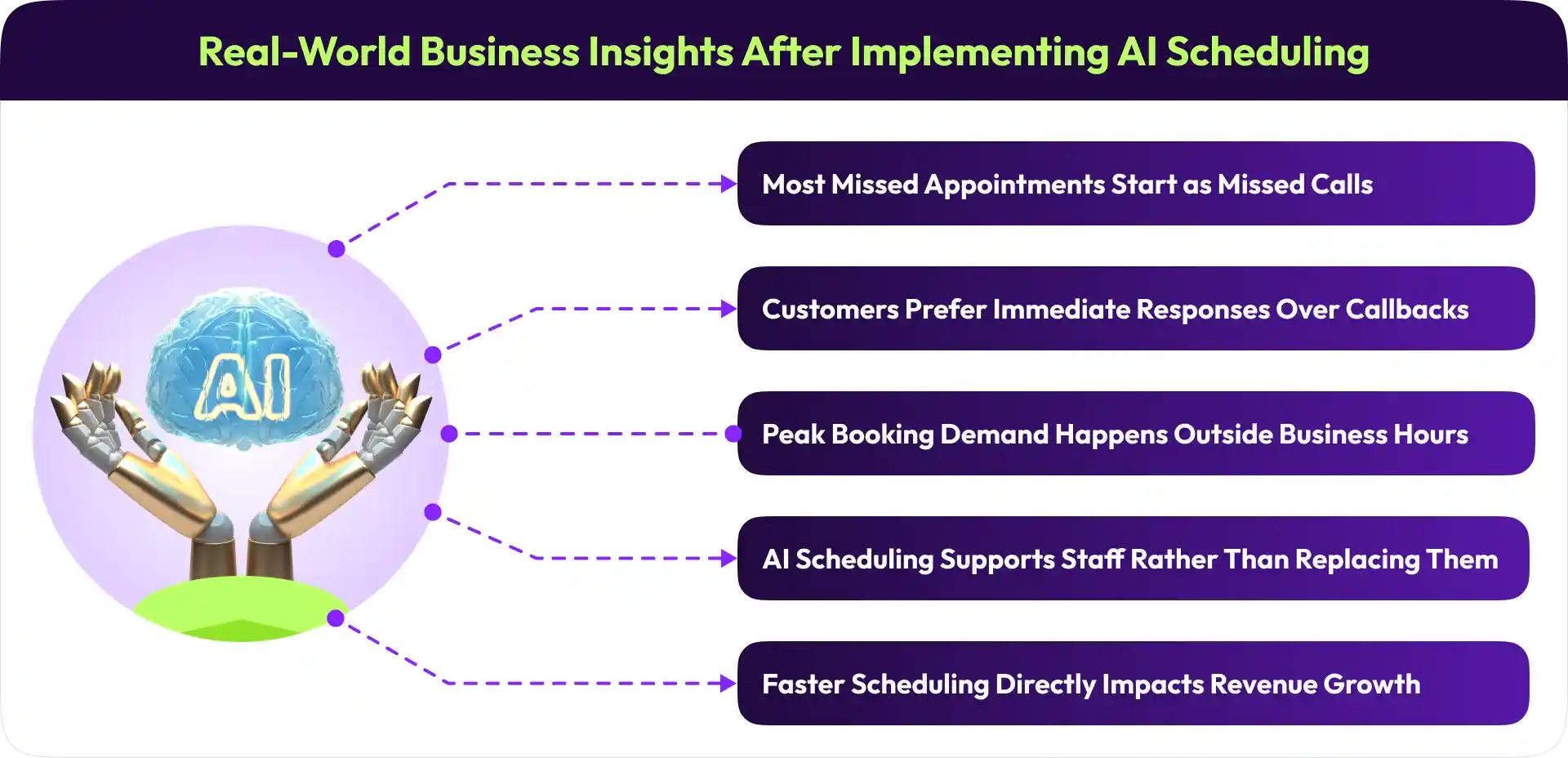
Insight #1: Most Missed Appointments Start as Missed Calls
Many businesses assume appointment issues begin with no-shows.
In reality, the problem often starts much earlier. If nobody answers the phone, the appointment never gets booked in the first place.
Most people would rather receive an instant answer than wait for a return call. Even if the response comes from AI, convenience usually wins.
Insight #3: Peak Booking Demand Often Happens Outside Business Hours
Many organizations are surprised to discover how many scheduling requests arrive in the evenings, early mornings, and weekends. Voice AI helps capture demand that would otherwise go unanswered.
Insight #4: AI Scheduling Supports Staff Rather Than Replacing Them
The goal isn't to remove human interaction entirely. Instead, AI handles routine scheduling tasks while employees focus on situations that require empathy, judgment, or expertise.
Insight #5: Faster Scheduling Directly Impacts Revenue Growth
When customers can schedule quickly, conversion rates often improve. The easier it is to book, the more likely people are to complete the process.
What to Look for in an AI Appointment Scheduling Solution
- Voice-Based Conversational Capabilities: The system should understand natural conversations, not just predefined commands.
- CRM Integration: Customer information should sync automatically with existing CRM platforms.
- Calendar Synchronization: Real-time calendar access helps prevent conflicts and double bookings.
- Automated Reminders and Follow-Ups: Reminder messages can reduce no-shows and improve attendance rates.
- Human Handoff Capabilities: Not every conversation should remain with AI. The ability to transfer calls to a staff member is important.
- Analytics and Reporting Features: Scheduling insights can help businesses identify trends and improve operations.
- Industry-Specific Customization: Different industries have different scheduling needs. The platform should adapt accordingly.
- Security and Compliance Considerations: Organizations handling sensitive customer information should evaluate security and compliance requirements carefully.
Common Concerns About AI Appointment Scheduling
Will Customers Be Comfortable Speaking with AI?
In many cases, yes. Most customers simply want a quick and accurate response. If the interaction is smooth and helpful, they often care less about whether they're speaking with a person or AI.
Can AI Handle Complex Scheduling Requests?
Modern Voice AI can manage a wide range of scheduling scenarios. However, human handoff remains valuable for highly specialized situations.
How Accurate Is Voice AI?
Accuracy has improved significantly in recent years. When connected to scheduling systems and business rules, Voice AI can handle routine booking tasks with a high degree of consistency.
Does AI Replace Receptionists and Scheduling Teams?
Generally, no. Most businesses use AI to support staff, reduce repetitive work, and improve responsiveness rather than eliminate human roles entirely.
Is Voice AI the Future of Appointment Scheduling?
The Shift Toward Always-Available Customer Service
Customers increasingly expect businesses to be accessible whenever they need assistance. Scheduling is no exception.
Why Businesses Are Moving Beyond Traditional Booking Systems
Traditional processes rely heavily on human availability. Voice AI helps remove that limitation while improving speed and convenience.
The Growing Role of AI in Customer Interactions
As conversational AI becomes more natural and reliable, businesses across industries are finding practical ways to use it. Appointment scheduling is one of the clearest and most effective applications.
Final Thought
Traditional appointment scheduling methods often create delays, missed opportunities, and unnecessary administrative work. Voice AI helps businesses answer calls, manage appointments, handle rescheduling requests, and remain available 24/7 without increasing operational complexity.
Across healthcare, professional services, hospitality & travel, real estate, and home services, organizations are using AI appointment scheduling to create smoother experiences for both customers and staff.
The businesses that respond first often win the customer. As expectations for convenience continue to grow, Voice AI is becoming less of a future technology and more of a practical tool for everyday operations. Organizations that make scheduling easier today will likely be in a stronger position tomorrow.
Frequently Asked Questions (FAQs)
What is AI appointment scheduling?
AI appointment scheduling uses artificial intelligence to automate booking, rescheduling, cancellations, reminders, and appointment management through voice, chat, or digital channels.
How does Voice AI schedule appointments?
Voice AI interacts with callers through natural conversations, checks availability in connected calendars, books appointments, sends confirmations, and manages changes automatically.
Can AI appointment scheduling integrate with existing calendars and CRMs?
Yes. Most modern AI scheduling solutions can integrate with calendars, CRM systems, booking platforms, and other business tools to keep information synchronized.
Does Voice AI work outside business hours?
Yes. One of the primary advantages of Voice AI is its ability to handle appointment requests 24/7, including evenings, weekends, and holidays.
Can AI handle appointment cancellations and rescheduling?
Yes. Voice AI can locate existing appointments, present alternative availability, update schedules, and send revised confirmations automatically.